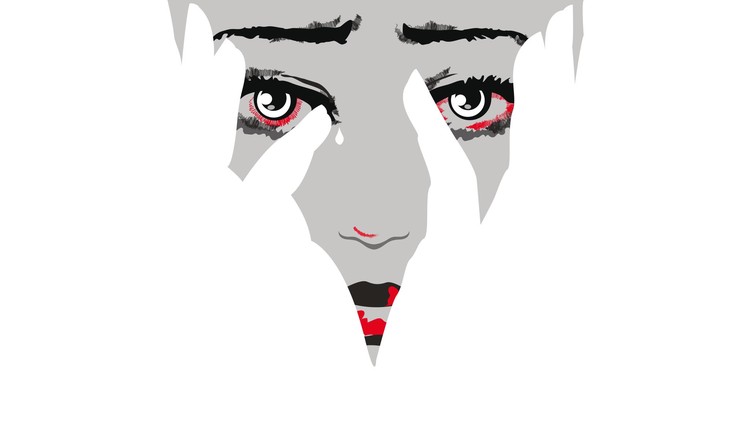
The City of Eugene, Oregon just this evening passed an official resolution affirming that it is a human right for people to have choice in mental health treatment, including choice of non-drug alternatives. It also affirmed the right to treatment oriented toward complete recovery.
I have special reason to be proud of this resolution, as I initiated work on it and my friends and colleagues in Eugene helped get it passed! Now I hope some of you out there ask your own city councils & other bodies to pass your own resolutions, affirming these same rights. You can read the text of this resolution here. You can also find some background and references for some of the claims made in the resolution here.
I also want to describe the process we went through to get this resolution passed, for those who might be curious. [continue reading…]
Congratulations to Eleanor Longden, who just graduated from college with honors, years after she was told that her “schizophrenia” was hopeless and all she could do for it was to take medications. Fortunately, she then went to a different psychiatrist, someone who actually knew something about recovery. Read more…..
You wouldn’t expect to find it in the Wall Street Journal, but writer Jeanette Winterson does an eloquent job of talking about valuable aspects of existence that lie outside of mental stability, in her article, In Praise of the Crack-Up
[Note: The document below is just a part of the proposed consumer empowerment guidelines for Lane County. I’m posting this separately here, because it is the part of the document that would be of most general interest.]
Recovery from many kinds of problems is affected by beliefs about the possibility of recovery. Consider a hypothetical example of a person who has received an injury which affects the person’s ability to walk, but which is not necessarily permanently disabling if strong efforts are made to recover. If the person is led by medical authorities to believe that the disability is permanent, efforts at rehabilitation will probably not be made, and the prediction may become a self fulfilling prophecy. Since the disability at that point is a result of the inaccurate prediction rather than the injury itself, the disability becomes a medical system induced condition.
The mental health system faces the same kinds of issues. In fact, none of the major mental health disorders have been shown to be reliably permanent, and no studies have shown mental health professionals being able to determine who will definitely have the disorder for the rest of their lives.[i] For each disorder, at least a sizable minority are found to fully recover, without need of further medication or other mental health treatment.[ii] Consumers who do recover typically credit others who helped them believe they could recover, and their own efforts at recovery, as essential parts of that recovery.[iii]
And yet, many consumers have been led to believe by the mental health system that they will always be “mentally ill” and that their need for treatment, in particular treatment by medication, will inevitably be lifelong as well.[iv] [continue reading…]
In the mental health field currently, when people experience intense anxiety and depression, and when they experience mania and/or psychosis, the experience is understood to be a “disorder” or a “biological dysfunction” that is of no use and should “corrected” by any means that might be effective in doing so. The most straightforward way of doing this is conceived to be a drug that might directly reverse the theorized “biochemical imbalance” though other methods are tried, particularly when drugs don’t work.
The primary opposition to this point of view in our culture comes from those who deny the existence of mental disorders at all: they see “diagnosis” in the mental health field as being an illegitimate enterprise, and the DSM as a work of quackery designed to make money for drug companies and for “mental health professionals.” It is noted that there is no physical test for any sort of “mental disorder” and no objective way of determining what should be called a disorder. It is then imagined that people would do fine if saved from those in the mental health field who attempt to diagnose and then “help” them.
A middle ground between these two extreme views is however emerging. In this view, the mental states that get diagnosed as “disorders” tend to be specialized states of mind which do tend to cause trouble for people, but which can also be seen as part of an evolved, problem solving strategy used by the mind. That is, while these mental states may not be consciously chosen by the person and may cause problems, they also may solve important problems, and so in any given case it may be unclear whether they are doing more harm than good.
An example of a “biological” evolved problem solving strategy that both causes problems but also potentially solves problems is that of a fever. Fevers cause many problems, and if quite high may cause brain damage or even death, yet we have evolved to have fevers because they often help solve the problem of infections. [continue reading…]
People diagnosed with schizophrenia are commonly told that their problem is due to their genes, or to their “genetic vulnerability.” This is often done as part of an effort to convey the notion that their genes are defective and therefore the person can expect to have a lifelong mental illness, with the best hope being to take drugs for the rest of the person’s life in order to deal with it. While this viewpoint is often presented as though it is a logical perspective based on evidence, it is actually full of holes and inconsistent with the evidence.
First, while there is evidence suggesting (not fully proving) that such a thing as an increased genetic vulnerability to having “schizophrenia” exists, there is zero evidence demonstrating that such increased vulnerability MUST be present in order to create the problems that get diagnosed as schizophrenia. In other words, no study has ever shown that there is a genetic subtype of human beings who have zero vulnerability to schizophrenia, regardless of level of trauma, stresss, etc. [continue reading…]
“You have a biochemical imbalance in your brain. This medication will help correct that imbalance.” This is what most people diagnosed with a “mental disorder” will hear in the USA. Yet, there is no solid evidence of any such imbalance, no brain test, and most of the theories about particular imbalances have been actually disproven. Nevertheless, the mantra about imbalances is still chanted – because even though it is wrong and even though it robs people of hope of ever recoverying without drugs, it does help get people to “take their meds” and that is what our current mental health system is designed to do.
While there is no specific “chemical imbalance” that can be reliably found in people with a particular diagnosis, and no medication that restores a particular balance, there is lots of evidence that brain differences of various sorts play a role in mental problems. Does this mean that mental and emotional problems are sometimes “hard wired in” and full recovery is impossible? No, because modern science is showing how the brain itself is constantly being rewired, reorganizing itself, and this reorganization can lead to recovery. A very good and remarkably coherent summary of this reality is posted at http://bipolarblast.wordpress.com/2009/08/31/neuroplasticity-of-the-brain-2/
A recent, easy to read article on stress, titled “Brain is a co-conspirator in a vicious stress loop” it is pointed out that when we are chronically stressed, our brain rewires itself in ways that sometimes perpetuate stress.
What happens is that the parts of our brains which just do habitual behavior get stronger, while the parts of the brain that are good at making wise executive decisions get weaker. (The article uses the example of rats that keep pressing a lever to get food, even though they aren’t hungry.) Such reversion to strong habits may be helpful in some emergencies, which may be why our brains work that way, but this tends to be very unhelpful in chronic stress situations. Instead, we find ourselves carrying out habits that may not make any good sense, while we have a hard time thinking up new things to try or bringing any kind of wisdom or cunning to our decision making.
So that’s how stress can make us stupid. A further point, not covered in the article mentioned above, is how stressing about these changes can amplify the stress and make us truly crazy! [continue reading…]
In the attempt to convince people to take medications, the hazards of such medications are often minimized or overlooked. While many people may truly be better off taking some medications, at least for awhile, the danger in hiding the hazards of the drugs is that rational decisions about how long to stay on medications, at what dosage, and how hard to try to find alternatives, become impossible. Instead, an illusion is created that the only rational approach is to stay on medications indefinitely, because only an irrational person would risk the return of a destructive psychosis.
If we really allowed ourselves to face all the facts however, we would see that these decisions are much more complex. For example, while the effects of being caught up in psychosis can be terrible, the effects of the antipsychotic medications can be terrible as well. These medications significantly increase the risk of death, due to causing things like heart problems, metabolic syndrome, obesity, diabetes etc. And, while most of psychiatry is still in denial about it, it appears that antipsychotic medications have a tendency to shrink brains. (For those of you unfamiliar with the evidence for this effect, I include some references and other information at the end of this post.)
Some people might think that if antipsychotic medications will shrink the consumer’s brain and then possibly kill them, then the obvious decision is to just get off the medications as quickly as possible. However, the problem is that it appears that uncontrolled psychosis, and its associated distress, will also shrink a person’s brain and very possibly kill them (besides making a total mess of their life in other ways.) [continue reading…]
A lot of efforts to transform an often oppressive mental health have focused on “recovery” and making the mental health system more “recovery focused.” Many agencies have integrated the notion of recovery into their practice, and if the use of this word were a measure of progress, we would be well on our way to system transformation! Unfortunately, what seems to be happening is that as the word “recovery” is used more and more, it seems to mean less and less. I know someone for example who is on heavy doses of an antipsychotic as well as other medications, lives in a foster care home, and spends most of his daytime hours in a mental health day treatment program, yet is assured by his case managers that he is “recovered.”
More at this recovery page.