
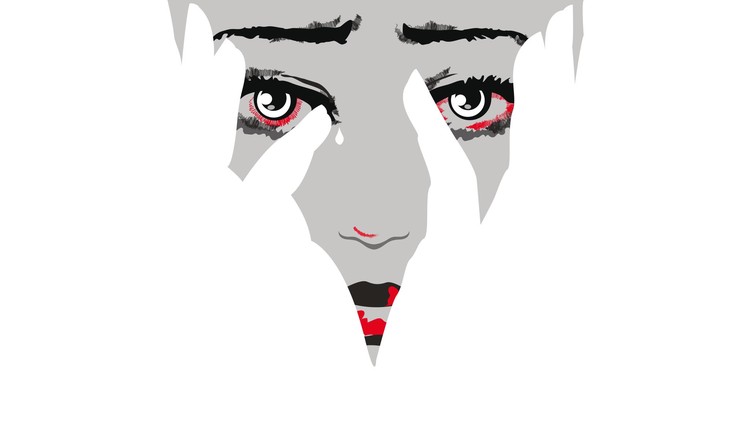
Madness, aka psychosis, is in some ways like wilderness.
A person can be lost in the wilderness, utterly bereft, suffering terribly, and desperately needing rescue. When we focus on those sorts of possibilities, it seems that wilderness is a terrible thing, and that it would make sense to stay away from it as much as possible, and to keep anyone else from going there.
But of course there are also more positive sides to wilderness, aspects of wilderness that attract many of us into it despite the dangers. And I would propose that the same is true of madness.
While professionals paint psychosis as nothing but bad, everyday speech acknowledges a more complex reality. Something may be “crazy” or “insanely” good, meaning it escapes normal limits. A “psychotic” guitar solo may be one that “blows your mind” – in a good way. Is it possible that everyday people are noticing a possibility that professionals routinely miss?
When we think of madness, or psychosis, as nothing but bad, we also slip into the opposite, which is thinking of “staying sane” or staying within our culture’s definition of sanity, as nothing but good. And yet, as my friend David Oaks likes to note, “normal people are destroying the planet.” It may be a bit “mad” to question this normality, but maybe more questioning is needed?
I would argue that psychology deadens itself when it buys into highly polarized theories of (completely bad) madness vs. (completely good) sanity and normality. Our world becomes much more interesting when we open ourselves to the possibility that there may be much of value in states outside of sanity, even if there is also danger of horrible misfortune in that same, tricky territory.
This point of view is not exactly new – for example the film “Crazywise” documents how in many indigenous cultures, when young people experienced something like what we would now call a “psychotic break,” it was seen as an indication that the person might have a calling to be a shaman. It’s not that they didn’t see the young person as needing help – they did get help and training – but they were also seen as someone who might be trained to competently explore, understand, and find useful things in the wild states of mind that go beyond “normality.”
I would argue that we become much more able to effectively help those who have gotten lost in madness when we view sanity vs. madness in a more nuanced way. Rather than proceding with certainty about the absolute superiority of our “sane” perspectives, we can engage much more productively with those who have wandered outside of sanity when we maintain openness to the possibility that they may sometimes have found something that the rest of us are missing (even when in other ways they may be badly in need of assistance.)
This is a big topic, not easily summed up in one discussion. But, in a webinar on 2/4/26, a few of us had an in depth conversation on this topic, the recording is available below!


I missed that webinar. Is there any way to receive the recording?
I do plan to edit this blog post to show the recording once it is available.